

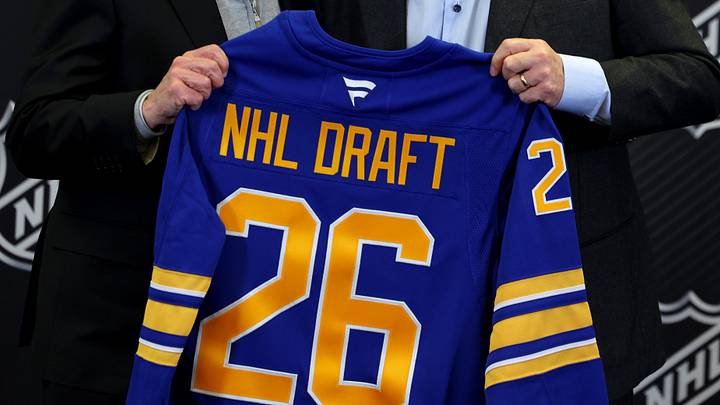
We’re only a few weeks away from the highly anticipated 2026 NHL Draft, set for June 26–27 at KeyBank Center in Buffalo, New York. This class has been hyped for years, and for good reason.
The 2026 draft is drawing massive attention because of its unusually deep top tier, the lack of a true consensus No. 1 pick, and the high‑stakes implications for several major‑market franchises desperate to reshape their futures.
At this point, it feels like a foregone conclusion that Penn State’s Gavin McKenna or Frölunda’s Ivar Stenberg will go first overall. But even the “big two” aren’t without their question marks.
McKenna is one of the most polarizing prospects in recent memory — a generational playmaker whose off‑ice reputation has been scrutinized heavily. Much of that stems from his aggravated‑assault charge following an altercation outside a bar. Prosecutors later withdrew the felony charge after reviewing video evidence and determining he did not act with intent to cause serious bodily harm, but the incident still lingers in the public conversation.
Stenberg’s criticisms are far more old‑school: he’s 6'0". That’s it. In a league where smaller, skilled players thrive more than ever, it’s an outdated knock, but it persists.

Beyond those two, this draft is loaded with near‑can’t‑miss talent: Caleb Malhotra, Carson Carels, Chase Reid, Keaton Verhoeff, Daxon Rudolph, Nikita Klepov, Adam Novotny — and that’s just scratching the surface. Any of them could reasonably be selected right after McKenna and Stenberg. This class is built to help underachieving teams with high picks finally catch up to the NHL’s elite.
Sounds like a fledgling general manager’s dream, right? Apparently not.
Rumors are swirling that several lottery teams are considering trading their premium picks for immediate roster help. Multiple insiders have reported that every team in the top eight is at least listening on their selections — a baffling approach given the strength of this class.
The most shocking rumor involves new Maple Leafs GM John Chayka, who is reportedly exploring the idea of trading the No. 1 pick to jump‑start his regime and push Toronto back into the playoffs in hopes of keeping Auston Matthews long‑term. (For what it’s worth, I think Matthews is leaving anyway — but that’s a column for another day.)
The Sharks, holding the No. 2 pick, are also rumored to be considering a trade down to acquire more assets and target a defenseman they feel fits their needs better than McKenna or Stenberg. In Mike Grier’s mind, perhaps the window is already opening with a young, talented roster and a potential top‑three player in Macklin Celebrini.
The Canucks could trade back to draft new head coach Manny Malhotra’s son, Caleb — or simply take him at No. 3. It might be a slight reach, but not an outrageous one.
Meanwhile, the Blackhawks, Kraken, Jets, and even the Rangers are reportedly gauging the market for their lottery picks. Some GMs seem convinced that because the top of the draft is so fluid, they can trade down a few spots, still get “their guy,” and squeeze value out of a desperate trade partner.
From the Rangers’ perspective, the chatter around trading the No. 5 pick appears more like an attempt to trade up. And if you’re moving up from No. 5, it’s only to grab McKenna or Stenberg.
But the logic doesn’t track. The Rangers are perfectly positioned at No. 5 to land a franchise‑altering player without giving up anything. Chris Drury would be wise to sit back and let the desperate, relevance‑chasing GMs cannibalize their own futures for short‑term survival.
New York needs everything — which, ironically, makes this easier. No matter how the chaos unfolds, a player they desperately need will fall right into their lap.
As it stands, the Rangers hold the No. 5 pick, the Stars’ first‑rounder (late, but not that late after Dallas’ quick exit), and their own second‑round pick in what is arguably the deepest draft in a decade.
Patience isn’t just a virtue here — it’s the path to winning the draft outright.
To quote Paul Rudd in "Forgetting Sarah Marshall":
“Do less.”
 Add us as a preferred source on Google