

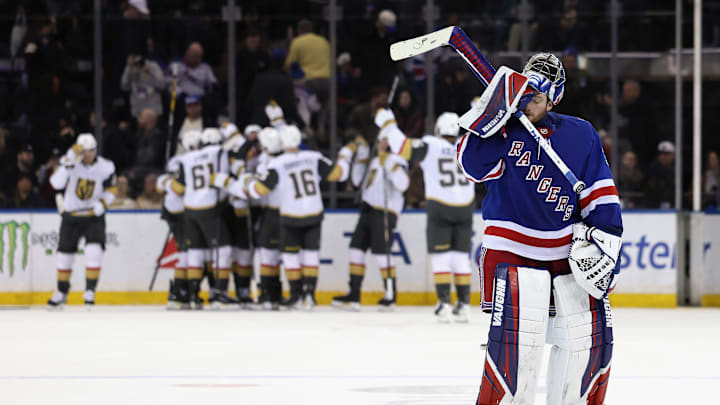
The New York Rangers have seen three of their last four games go to extra time, each reaching that stage in entertaining and dramatic fashion. Yet once overtime begins—both in these contests and across much of the NHL—the play often feels contrived, predictable, and dull.
Up until the late 90’s, the dark ages of the neutral zone trap, clutching and grabbing, and boring hockey were a plague on the league. They stifled offensive creativity, drained excitement from the game, and worst of all, produced far too many tie games.
After the cancellation of the 2004-05 NHL season, the powers that be knew they had to win new fans, bring old ones back, and give people something to cheer about. The number one issue on their hit list was regular‑season overtime. Even after the rule to change in 1999-2000 season to a 4-on-4 overtime format, it still led to plenty of ties that left hockey fans yearning for more.
Too much time and money were invested by fans to attend games, only to have them end in ties that left everyone dissatisfied. Let’s be honest: ties aren’t fun. They’re boring, and they make you feel like you wasted your night at a sporting event.
Coming off the lock-out. The game needed a revamp and a rebrand. The big change everyone wanted was overtime and after some successful beta testing in the AHL (American Hockey League), the NHL finally gave the fans what they wanted. The long-awaited shoot-out, this was done to eliminate ties from regular season games once and for all.
So, if those five minutes of overtime weren’t enough, the inevitable shootout followed. This was an overwhelmingly successful rule change that brought excitement — and actual winners and losers — to closely contested games.
It was one of the best things to happen to hockey when the sport needed it most. To this day, I still remember sitting on my couch on November 26, 2005, watching Marek Malik in that gorgeous Rangers navy‑blue Liberty jersey pull the puck through his legs and roof it over Olaf Kolzig in the now‑legendary 15‑round shootout at Madison Square Garden.
But as with all good things, it eventually grew stale. So, in the 2015–16 season, the NHL gave overtime another jolt of life, switching to 3‑on‑3 to reduce shootouts and increase scoring chances. The change has led to more open ice and scoring chances. But even that has become repetitive, counterproductive and a little dull.
And here we are in 2025, and I’m lobbying for yet another change — one that feels long overdue
How many times have you watched a regular‑season overtime game and booed your TV in frustration as a supremely talented player skates into the offensive zone with speed, only to recoil back out for no reason because the perfect passing play didn’t materialize?
Even home‑ice fans boo their own team when this happens. It’s bad hockey. It makes for bad television. Overtime is supposed to be the most exciting part of the game, yet in the regular season it’s become a chore to watch.
It’s an epidemic of repetitive play that needs to be abolished. And I have the answer
My suggestion to the NHL competition committee — because clearly, they’re reading this article — is simple: institute a regular‑season overtime rule that penalizes teams for recoiling out of the offensive zone past the red line. If a player crosses the blue line into the offensive zone, they cannot retreat past center ice without consequence. Doing so would be whistled as an offensive delay of game, resulting in a faceoff back in their own defensive zone.
This rule would force teams to think twice before pulling back. They’d either have to keep the puck in the zone or attempt a play in the tighter window between the red line and the opposing blue line. That would lead to immediate offense or turnovers that create breakaways and 2‑on‑1s the other way. Imagine the added accountability — and the excitement.
And if a team does infract, the resulting defensive‑zone faceoff in 3‑on‑3 play would be high‑pressure and critical, creating new dramatic moments in overtime.

Visualize watching an overtime Rangers vs. Devils game. Jack Hughes flies into the zone, only to realize he’s alone — his linemates are still trailing. In a panic, he circles back out, but now he’s dangerously close to the red line, trying to avoid a delay‑of‑game infraction. He fumbles the puck off an Artemi Panarin poke check.
The Breadman is gone. All alone on a breakaway. The Garden rises to its feet in anticipation. He dekes, shifts to the backhand, and roofs the puck home for a dramatic overtime winner. Leg kick. Game, set, match. Panarin leaps into the arms of his teammates as Madison Square Garden roars, the goal song blasting in victory.
This is just something for the NHL and its decision makers to ponder. I think this is the answer. But I know one thing for sure... overtime needs an overhaul!
 Add us as a preferred source on Google